
AI: The Assisting Technology for Humans.
Updated: Jul 18, 2025
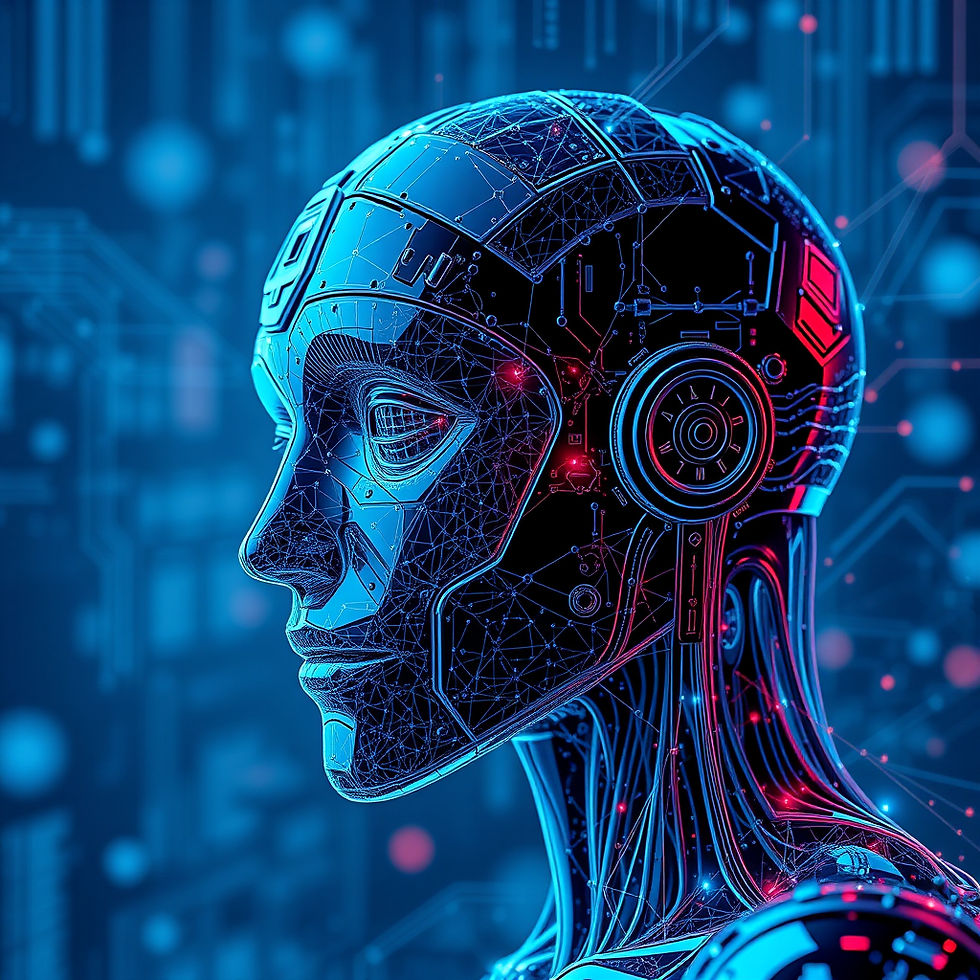
Description:
Artificial Intelligence (AI) is no longer just a buzzword or a sci-fi fantasy—it's something most of us interact with every day, often without even realizing it. From smart assistants and streaming recommendations to healthcare and finance, AI is quietly transforming our world. This article breaks down what AI really is, how it’s being used, the good it can do, and the important questions we need to ask as it continues to grow.
Artificial Intelligence: How It's Shaping the Way We Live and Work
A few years ago, the idea of machines thinking like humans felt like something straight out of a science fiction movie. Fast forward to today, and Artificial Intelligence—better known as AI—is not just real, it’s everywhere.
Whether it’s your phone suggesting the fastest route home, your favorite app recommending a movie, or a chatbot answering your bank questions at midnight, chances are, you’ve already crossed paths with AI today. But what exactly is it? And why is everyone talking about it?
So, What is AI?
At its core, AI is about teaching computers to "think" or make decisions in a way that mimics human intelligence. It doesn’t mean machines have feelings or consciousness (at least not yet), but they can be trained to recognize patterns, learn from data, solve problems, and even communicate with us.
There are a few types of AI, but to keep it simple:
Narrow AI is what we have now—machines that are really good at doing one specific thing, like translating languages or recognizing faces in photos.
General AI (still theoretical) would be more like a human brain—capable of learning and reasoning across many tasks.
Superintelligent AI is a futuristic concept where machines could outperform us in pretty much everything. Cool and creepy at the same time.
Where You’re Seeing AI in Real Life
AI isn’t just powering tech gadgets—it’s quietly revolutionizing entire industries:
Healthcare: AI helps doctors diagnose diseases faster, analyze scans, and even predict health issues before they become serious.
Finance: Banks and fintech apps use AI to detect fraud, make investment decisions, and give personalized financial advice.
Education: From apps that adapt to your learning style to AI tutors, technology is making learning more personalized and accessible.
Transportation: Think self-driving cars, smarter traffic lights, and even AI-powered delivery drones.
Customer Service: Chatbots and virtual agents are now handling a lot of everyday questions, saving time for both businesses and customers.
Why It Matters: The Good Stuff
AI has a lot going for it:
It’s fast: AI can process huge amounts of information in seconds—way faster than any human.
It’s consistent: Unlike people, AI doesn’t get tired or distracted.
It’s personal: From shopping to streaming, AI customizes experiences based on what you like.
It’s helpful: In many areas, AI can assist—not replace—humans, freeing us up to focus on more creative or meaningful work.
💬 One powerful example of this is ChatGPT — an AI tool revolutionizing how we write, plan, and think. Explore how ChatGPT is assisting humans in everyday tasks.
But It’s Not All Smooth Sailing
As powerful as AI is, it raises some serious questions:
Jobs: Some roles may disappear as machines take over repetitive tasks. How do we prepare people for new kinds of work?
Bias: AI systems can reflect human biases if the data they’re trained on isn’t fair or diverse.
Privacy: The more AI knows about us, the more we have to think about who has access to our data.
Accountability: If an AI makes a bad decision—like a wrong medical diagnosis or a biased loan rejection—who’s responsible?
Looking Ahead
AI is still growing, and we’re only scratching the surface of what it can do. The goal isn’t to build machines that replace us, but to create systems that work with us—helping solve problems, improving our lives, and making things more efficient.
But as we move forward, we’ll need thoughtful rules, ethical guidelines, and open conversations to make sure AI serves everyone—not just a select few.
Final Thoughts:
AI isn’t some far-off future technology—it’s already here, woven into our lives in ways we often don’t notice. The challenge now is to guide its growth in a way that’s smart, fair, and human-centered. The future of AI isn’t just about machines. It’s about us—and how we choose to use this incredible tool.


Comments